Carpet care Maryland
Wool, Sisal and Synthetic Stair Runner Cleaning Guide
How to care for custom wool, nylon, sisal and blend stair runners in Maryland homes without yellowing wool fibers, shrinking woven backings or wetting oak treads.
Ready for a professional clean? Book online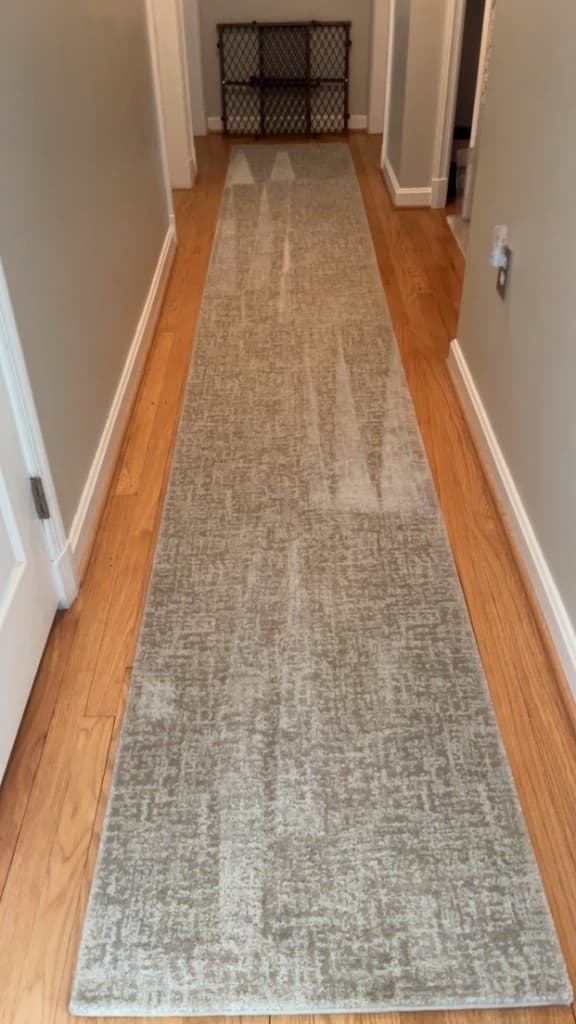
In this guide
A custom stair runner anchors the entry of many Bel Air, Fallston, Towson, Lutherville-Timonium and Monkton homes. Whether it is a tailored herringbone wool weave framed by stained oak treads or a durable synthetic runner protecting a busy family staircase, stair runners collect more concentrated soil per square inch than almost any other floor in the house.
Every trip upstairs puts heel pressure, outdoor grit and natural foot oils directly onto the curved front nose of each tread. Cleaning a stair runner well takes slower hand-tool discipline and fiber-specific chemistry, because treating wool or natural plant fibers like standard polyester carpet causes irreversible damage.
Step one: identify what your runner is actually made of
Many custom runners look almost identical at a glance, yet their safe moisture and pH tolerances are completely different.
Woven wool and wool-nylon blends have natural soil-hiding scales and rich bounce underfoot, but wool is an animal protein fiber. High-alkaline detergents (above pH 8.5), hot water blasts or retail oxygen bleaches like OxiClean break down wool keratin, strip lanolin luster and leave permanent yellow rings.
Solution-dyed nylon and polypropylene synthetic runners tolerate standard hot water extraction well and release oily nose buildup cleanly with measured traffic-lane pre-treatment and hand brushing.
Pure sisal, jute, seagrass and high-viscose decorative runners absorb water rapidly and can brown, buckle, shrink off tack strips or stiffen if wet-extracted. Inspecting the fiber construction before applying moisture is essential.
Why stair runners require hand-tool precision
Standard carpet wands are built for open rooms, not stairways bordered by refinished hardwood, white painted risers and decorative brass rods. In our dedicated wool carpet and stair runner service, every flight is handled step by step:
- Dry suction vacuuming removes sharp sand and clay grit along the tack seams and edges without running an aggressive beater bar that snags woven loops.
- Colorfastness and fiber checks verify dye stability on patterned borders before any solution touches the runner.
- WoolSafe-aligned pH-neutral pre-conditioning loosens foot oils on every bullnose and landing.
- Controlled-moisture hand-tool extraction flushes loosened soil out of the face pile while keeping the woven jute or cotton backing from saturating or shrinking.
- Exposed oak treads, stringers and painted risers are wiped dry immediately as each step is completed.
You can see how controlled on-site extraction brightens narrow traffic paths beside wood flooring in our documented hallway runner case study.
Common mistakes that ruin stair runners
The three fastest ways homeowners accidentally damage a custom runner are scrubbing with a stiff brush, spraying peroxide-based pet spotters onto wool, and soaking steps with rental machines. Scrubbing unravels tight loop piles and creates permanent fuzzy patches along the bullnose. Peroxide bleaches wool permanently. Heavy water from portable rental machines runs down behind the backing, leaving damp wood treads and rusty carpet tacks.
If a pet accident, wine splash or muddy paw hits your stairs, check our Emergency Stain First-Aid Guide before reaching under the sink. Plain white towels and gentle downward blotting protect your runner until proper spotting arrives.
Dry times and timing around family traffic
Synthetic stair runners typically dry in two to three hours with normal HVAC airflow. Dense woven wool runners usually take three to five hours because natural wool holds slight internal humidity longer than synthetic fiber. Turning on hallway ceiling fans and keeping shoes off the stairs until dry to the touch keeps the refreshed nap crisp.
Getting an accurate quote for your staircase
Because runner width, stair count, pie-shaped winders, landings, stair rods and fiber composition vary from home to home, wool runners are confirmed by written quote rather than generic room pricing. Tell us your town across Harford County or north Baltimore County, share how many steps and landings you have, and send a quick photo through our contact form or text (443) 252-0607.
Find the right cleaning service
Compare the service details and check your area before requesting a quote.
Local people. Thoughtful care.
Meet the owner behind Eco-Dry.
Rich Tobin runs Eco-Dry from Forest Hill. Your visit may be handled by Rich or an Eco-Dry technician, with the cleaning method matched to your surfaces.
Meet RichKeep exploring
A little more useful advice.
- Maryland
Pre-Listing Floor Prep in Maryland: Clean, Refinish or Replace
A practical guide for Maryland sellers and listing agents deciding when to steam clean carpet, clean and buff hardwood, restore grout or replace worn flooring before photography.
Read the guide - Baldwin
Hosting the holidays in Baldwin: when to book the carpet cleaning
Hosting Thanksgiving or a December get-together? When to book carpet and sofa cleaning, how much room to leave for drying and how to be ready for the spills that come with a full house.
Read the guide - Cockeysville
Normal wear or damage? Your Cockeysville apartment carpet before move-out
Matted traffic lanes and furniture dents are a different thing from burns and bleach spots. A plain look at apartment carpet before you move out, with notes on photos, receipts and reading your lease.
Read the guide