Darkened stair noses and landings
Shoes and bare feet deposit body oils and outdoor grit right on the curved edge of each step. Hand-tool attention restores the runner front to back.
Natural Fiber & Staircase Care / Harford, Baltimore & Howard County
WoolSafe-aligned, pH-neutral cleaning for woven wool carpet and custom hallway or stair runners.
Woven wool wall-to-wall carpet and custom stair runners from makers like Stark, Karastan, Stanton or Masland cannot take the high-alkaline pre-sprays and scalding temperatures used on synthetic nylon. High pH damages wool keratin fibers and bleeds dyes. We use WoolSafe-aligned pH-neutral chemistry, cooler water temperatures, gentle hand tooling on every riser and nose, and careful protection for painted risers and hardwood stair treads.
IICRC certified. Fully insured. Every surface tested before cleaning begins.
01 / White-glove home standards
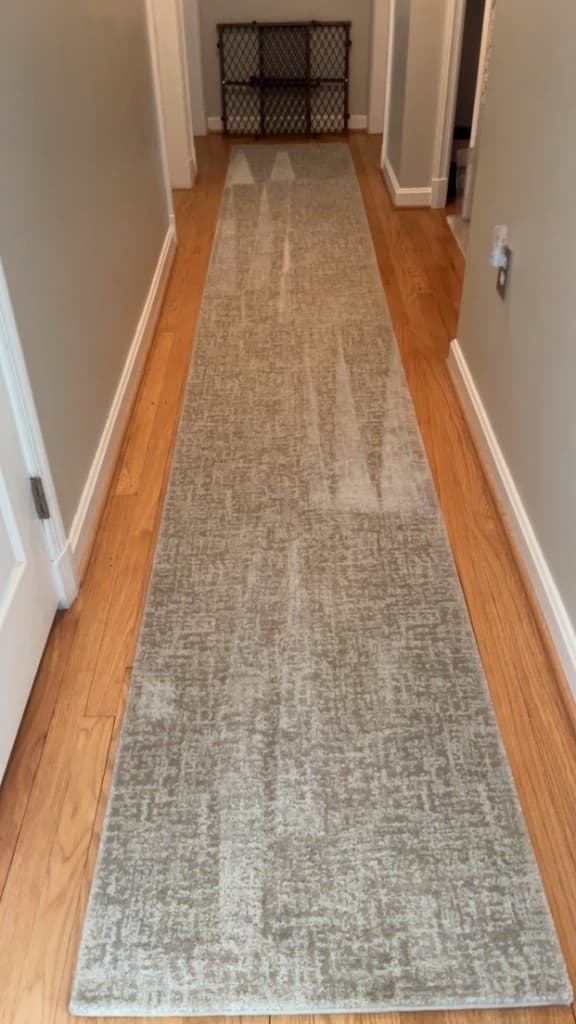
Historic colonials in Ruxton, Stoneleigh and Lutherville, horse-country estates in Monkton, Phoenix and Sparks, and custom homes in Fallston and Ellicott City often feature woven wool stair runners over hardwood treads or plush wool bedroom carpet. Wool naturally hides dry grit deep inside the pile until the stair noses suddenly look gray. Proper low-pH extraction removes abrasive soil before it cuts the wool fiber while keeping moisture off adjacent hardwood and painted woodwork.
02 / Natural vs. synthetic carpet care
Treating wool like polyester or nylon is the fastest way to cause yellowing, fuzzy texture distortion or backing shrinkage. Here is how our process adapts.
| Factor | Standard synthetic carpet (nylon / polyester) | Woven wool & custom stair runners | Why it matters |
|---|---|---|---|
| Cleaning chemistry pH | Moderate alkaline pre-spray (pH 8.5 to 10) | Neutral to mildly acidic wool-safe formula (pH 5.5 to 8.0) | High alkalinity dissolves natural wool scales, causing harsh texture and yellowing. |
| Water temperature | High-heat steam extraction | Controlled warm water (never scalding) | Excess heat shrinks woven wool backings and destabilizes natural dyes. |
| Mechanical agitation | Counter-rotating brush where pile allows | Gentle manual or soft-brush agitation; no beater bars on loops | Prevents fuzzing, snagged loops and pulled runner binding. |
| Stain & pet treatment | Standard enzyme or oxidizer spotters | Wool-safe spotters only; never standard bleach or strong oxidizers | Oxidizers and enzymes designed for synthetics can permanently bleach or weaken wool protein. |
| Stairway wood protection | Standard wall-to-wall stair hand tool | Narrow stair tool, controlled overspray, immediate wipe-down of exposed hardwood edges | Keeps moisture off refinished oak treads, painted risers and brass stair rods. |
03 / Step-by-step protocol
Pure sisal, seagrass and jute runners swell and water-stain from wet extraction, and store-bought peroxide or bleach spotters permanently strip wool color. During inspection we confirm the fiber blend and let you know honestly whether pH-neutral extraction is safe or whether dry-only care is required.
Honest boundaries on sisal, jute and permanent wool yellowing: Wool wall-to-wall rooms and custom stair runners are confirmed by quote or during your walkthrough so wool-safe chemistry, hand-tool time and wood-edge protection are scoped properly.
What happens during the visit
We confirm whether the runner or carpet is 100% wool, a wool-nylon blend, or a wool-viscose/sisal blend, check tacking and brass rods, and test dyes on an inconspicuous edge.
Wool holds dry grit invisibly deep in the base of the pile. Thorough suction-only vacuuming removes abrasive sand before wet cleaning begins.
We mist a wool-safe neutral pre-conditioner focused along dark stair noses, landings and entry paths without soaking natural jute or cotton backing.
Each tread, bullnose and riser is extracted carefully with high vacuum recovery while exposed oak stair edges and painted risers stay dry and wiped clean.
We groom wool pile cleanly and run airflow guidance so the runner dries evenly without rippling, browning or moisture transfer to wood treads underneath.
Shoes and bare feet deposit body oils and outdoor grit right on the curved edge of each step. Hand-tool attention restores the runner front to back.
Many designer runners mix wool with viscose (rayon) or sisal. Pure sisal and high-viscose weaves are highly moisture-sensitive, so we inspect fiber ratios first and recommend dry cleaning or a specialist if wet extraction is unsafe.
Urine turns alkaline as it dries and can permanently yellow wool fibers. Call promptly and blot gently with cool water only; never spray store-bought oxy cleaners on wool.
Where we work
Based in Forest Hill, Eco-Dry Carpet Cleaning brings specialty stone, fine textile and wool care to estates and residences across Harford County, north Baltimore County and Howard County.
Common questions
Have a specific stone type, designer fabric tag or custom stair runner? Send a photo and we will confirm the safe method and written scope before work begins.
Send photos for a quoteYes, when cleaned with controlled warm water (not scalding heat), wool-safe pH-neutral chemistry, and strong vacuum extraction so the natural backing never stays saturated.
No. We use precision upholstery and stair hand tools with controlled low overspray, keep moisture strictly on the wool face fiber, and wipe exposed wood edges dry immediately.
We inspect fiber content first. Pure sisal, jute and high-viscose runners react poorly to water, so we will tell you honestly if your runner requires dry-compound care or a specialist rather than wet extraction.
Blot gently with a plain white cotton towel and a small amount of cool water only. Never use store-bought oxy sprays, ammonia or alkaline spotters on wool because they can permanently bleach or yellow the fiber.
Ready when you are
Choose your services online. We confirm the details and agree on the scope before work begins.