
Carpet care Abingdon
Why Abingdon carpeted stairs need their own cleaning plan
Stair noses, risers and landings wear differently from a bedroom floor. Learn what to count, what to clear and what to expect from professional stair cleaning.
Ready for a professional clean? Book online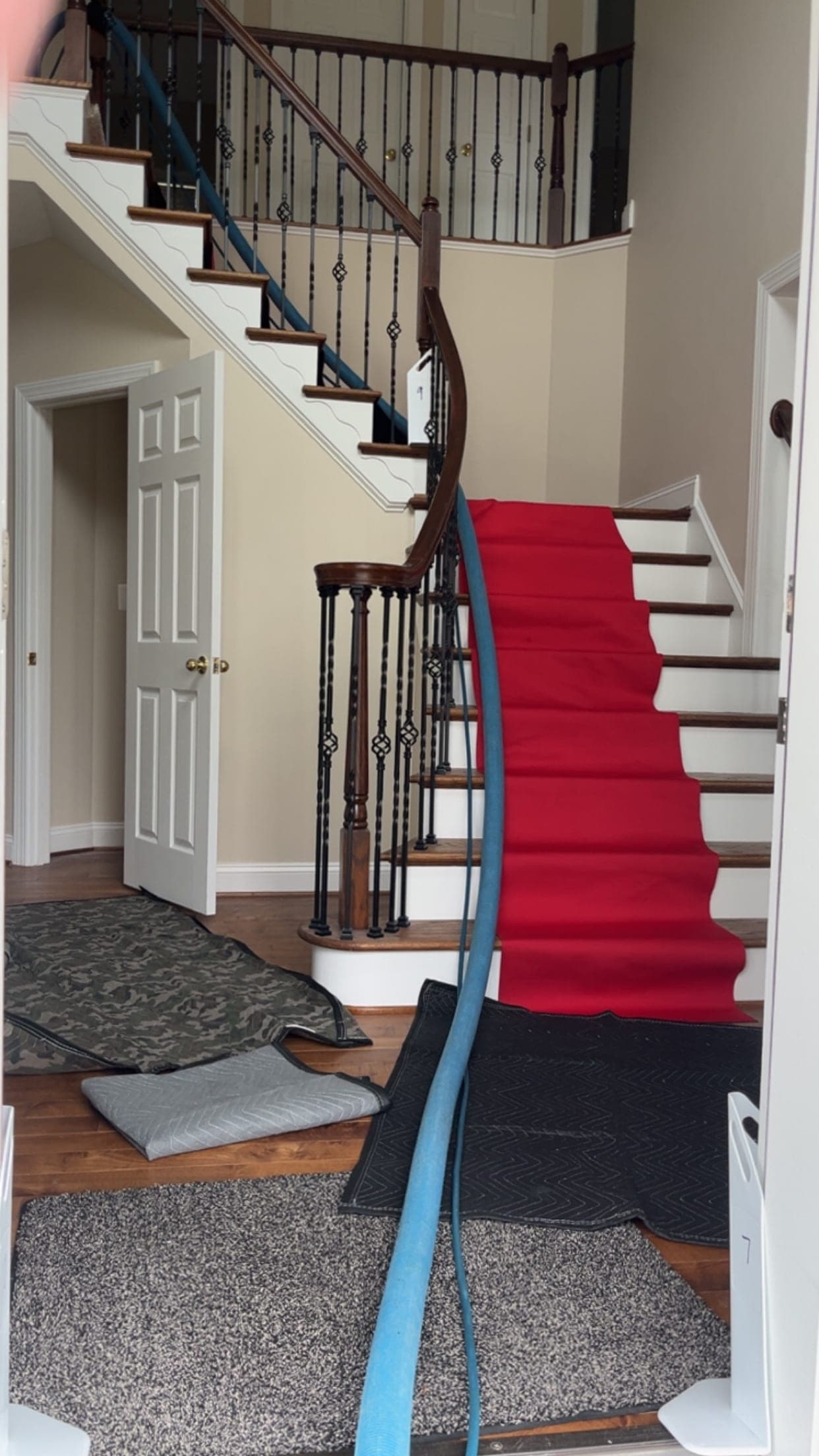
In this guide
Stairs are a small area with a surprisingly complicated job. Every trip up or down puts feet in roughly the same places. The front edge of each tread receives repeated contact, while the riser beneath it may collect a different kind of soil. A landing adds another turning point where the pattern changes again.
That is why the staircase in an Abingdon home should be described separately from the rooms around it. “Two bedrooms and a hallway” can leave out one of the most heavily used carpeted surfaces. A little preparation helps the quote, the working order and the result all make more sense.
Count the staircase as it exists
Count individual steps rather than assuming a standard flight. Include landings, split flights and any wide or curved treads. Mention carpeted areas at the top and bottom that should be part of the work.
A staircase with a turn can take different access planning from a straight run. If railings, furniture or a narrow doorway affect the route, include that information too. You do not need to estimate the technician's working time. You simply need to give a clear picture of the surfaces and the space available to work around them.
Notice where the carpet looks different
The center of a tread, the stair nose and the corners near the wall can show different conditions. Look for flattened fibers, loose edges, spots or a dark route where people naturally walk. A pet may repeatedly use one side of the flight, adding another pattern.
Compare these areas without assuming every dark edge is dirty. Lighting can exaggerate texture differences, and repeated wear can change the way carpet reflects light. Ask the cleaner which parts appear to be removable soil and which may be lasting wear. This is particularly useful if you are deciding whether cleaning will give the staircase a worthwhile refresh before a larger renovation.
Do the easy clearing before the appointment
Remove shoes, baskets and decorative items from the steps and landings. Clear the route at both ends of the staircase. A cleaner should not have to work around loose objects on a surface where balance and secure footing already matter.
Do not attempt repairs with improvised tools immediately before service. If the carpet is loose or a transition is lifting, describe it and ask whether repair is needed before cleaning. The cleaning visit should not hide a condition that makes the stairs difficult to use. Keeping the assessment honest helps protect both the work and the people moving through the house.
Explain the spots and previous attempts
Stair carpet may contain ordinary foot traffic, food spills, pet incidents or marks from carrying objects between floors. Each clue helps establish a more useful scope. Tell the cleaner whether one area has received repeated spray treatments or was recently cleaned with a small machine.
Avoid applying another product just to make a mark look less obvious before the visit. The current condition is useful evidence. If the stain is old and the substance unknown, a rough timeline is still helpful. The cleaner can discuss a reasonable approach without needing you to identify the fiber or chemical involved.
Plan who needs to use the stairs
A staircase often cannot be avoided as easily as a spare bedroom. Consider children, pets, a person working upstairs and anyone who may find a temporary change of route difficult. Discuss how the household can be organized before the appointment begins.
Ask about the cleaning order and the advice for using the stairs afterward. Do not assume the timing from a previous flat-room cleaning will apply exactly. Carpet construction, the amount of work and room conditions affect drying. Keep the stairs clear while they are unavailable rather than placing towels, mats or other loose coverings over them without guidance.
Look at the whole flight after drying
A consistent review is more useful than inspecting one wet step in bright light. Look at the stairs after the recommended drying period and from a normal viewing position. Notice overall improvement in removable soil while keeping the agreed limits in mind.
If a particular spot returns, photograph it and contact the cleaner with the timing and location. A returning spot can require a different conversation from a worn tread that never changed color. The clearer the original scope and observations, the easier it is to discuss what you are seeing without assuming that every remaining difference means the same thing.
Keep the busiest route in the maintenance routine
Once the carpet is ready for normal use, include the steps and landings in regular vacuuming with a suitable attachment. Take care around edges and follow the carpet and vacuum manufacturers' guidance. A quick pass over the bedrooms does not address the repeated use concentrated on the stairs.
See carpet cleaning in Abingdon for the service details and other Abingdon cleaning options if you are planning a combined visit. A clear step count, a safe working route and realistic expectations turn “please do the stairs too” into a properly planned part of the appointment.
Find the right cleaning service
Compare the service details and check your area before requesting a quote.

Local people. Thoughtful care.
Meet the owner behind Eco-Dry.
Rich Tobin runs Eco-Dry from Forest Hill. Your visit may be handled by Rich or an Eco-Dry technician, with the cleaning method matched to your surfaces.
Meet RichKeep exploring
A little more useful advice.
- harford county
Choosing a carpet cleaner in Harford County: better questions to ask
Look beyond a low headline price and a dramatic photo. Use these practical questions to compare carpet-cleaning scope, expectations, access and follow-up.
Read the guide - harford county
Pet Stain Removal in Harford County
How Eco-Dry handles pet stains and urine odor with UV inspection, enzyme treatment, steam cleaning, and honest replacement advice when the pad is contaminated.
Read the guide - harford county
Move Out Carpet Cleaning Checklist for Harford County
A move out cleaning checklist for Harford County renters, landlords, and property managers dealing with carpet, stairs, pets, and turnover timing.
Read the guide