
Upholstery Ellicott City
Caring for a white sofa in Ellicott City
Light upholstery shows everyday use clearly, but brighter is not always better. Plan cleaning around the fabric, construction and the color it was designed to have.
Ready for a professional clean? Book online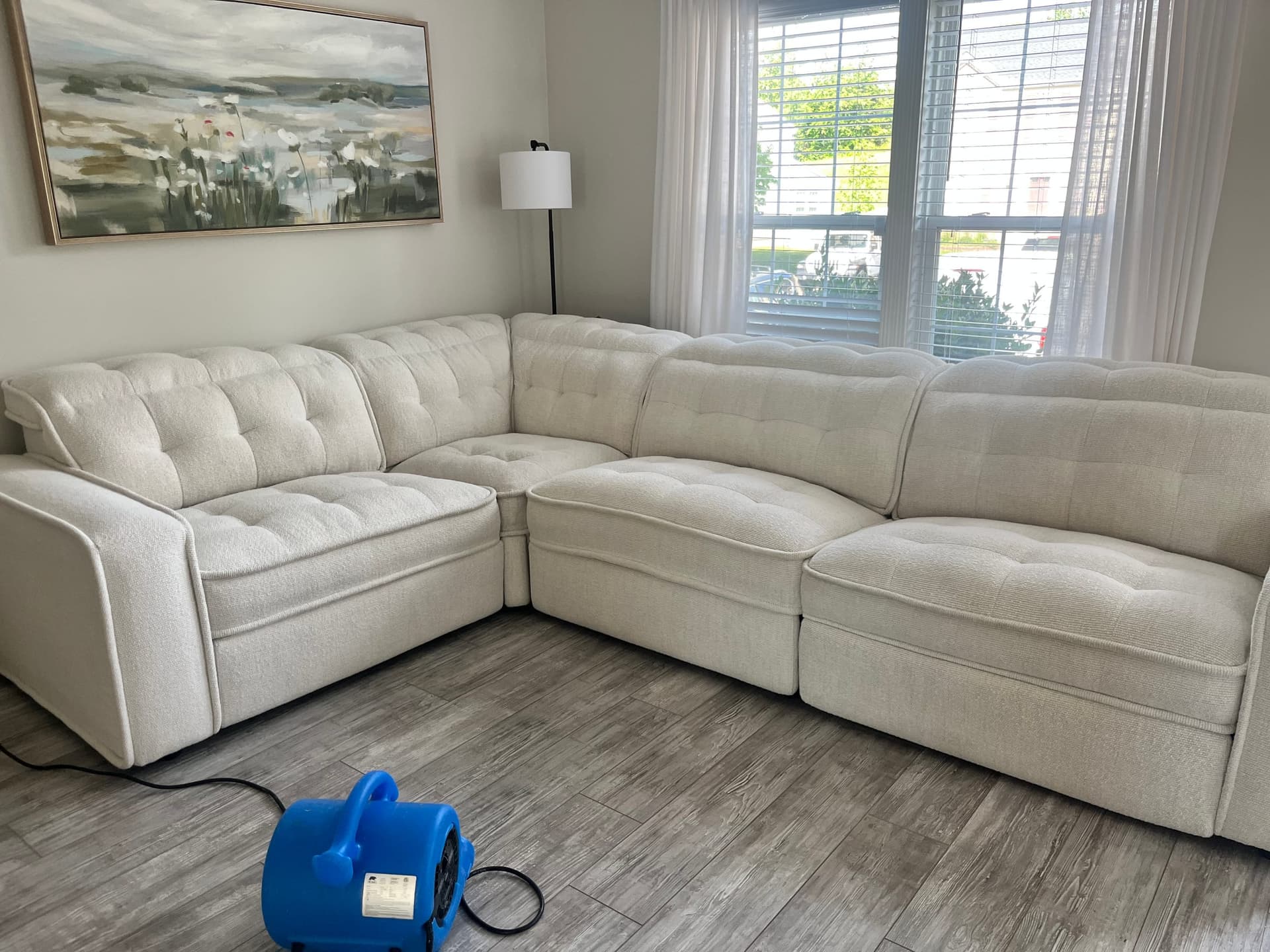
In this guide
A white or pale sofa can make a room feel calm and open. It also makes everyday contact easier to see. The arm used for reading, the front edge where someone sits to put on shoes and the seat nearest the kitchen can gradually look different from the rest of the piece.
For an Ellicott City home, the aim of cleaning should be appropriate care for that furniture, not an automatic pursuit of a brighter white. Fabric, dye, construction and previous treatment matter more than the color name. A well planned service starts by understanding those details and separating removable soil from changes cleaning cannot reverse.
Find the intended care instructions
Look for the manufacturer's label or model information. A pale fabric may be synthetic, natural, blended or constructed in a way that affects its response to cleaning. Color alone does not establish which products or methods are suitable.
Do not assume a performance-fabric description removes the need for instructions. Cleaning codes should be read with the manufacturer's full directions, including restrictions on saturation, extraction and laundering. If the information is missing, say so. A cleaner should assess the piece rather than confidently select a method based only on how light the upholstery looks.
Inspect the whole sofa in ordinary light
Compare the arms, seat fronts, back cushions and seams. Look at the frame as well as removable cushions. Areas that are touched frequently can have a different condition from the middle of a rarely used seat.
Use normal daylight rather than relying entirely on a bright phone flash. Shadows, fabric direction and room lighting can change the impression of color. Point out the differences that bother you most. A professional assessment should consider the entire piece so a localized treatment does not create an expectation of uniformity that the furniture's wear history cannot support.
Keep whitening products out of the guesswork
A light-colored sofa is not the same as washable white laundry. Do not assume bleach, a household brightener or a homemade mixture belongs on the fabric. An unsuitable treatment can create color or texture changes that cleaning does not repair.
If something has already been used, preserve the label and describe the sequence. The purpose is to understand the condition, not to blame the household for trying to help. Stop adding products while compatibility is uncertain. A clear history gives the cleaner more useful information than another attempt to make the spot less noticeable before the visit.
Separate general contact soil from a specific spill
Darkening on an arm may have a different history from a drink spilled on one cushion. Tell the cleaner which is which where you know. Include how long a mark has been present and whether it changed after treatment or drying.
If the substance is unknown, describe what happened around the time it appeared. A confident guess is not required. The cleaner can assess the visible condition and explain realistic options. Ask whether the proposed scope addresses isolated spots, broader upholstery soil or both. These are different requests even when they involve the same sofa.
Consider the limits of the fabric's history
Sun fading, worn fibers, dye changes and damage are not simply soil waiting for a stronger cleaner. A piece can become cleaner while retaining a difference in color or texture. That can still be a worthwhile improvement if the goal is clear.
Ask what result is expected after drying and what may remain. Avoid evaluating the work only while the fabric is wet, when its appearance may be temporarily different. A useful discussion gives you a way to assess the result fairly and decide whether any remaining condition calls for repair, specialist advice or simply different expectations.
Plan a calm drying period
Clear space around the sofa and arrange another place for the household and pets to sit. Follow the advice for cushions, air movement and reopening the furniture. Do not cover damp fabric with throws to make the room immediately presentable.
If a particular date matters, mention it when booking and leave some flexibility. Different materials and methods need different conditions. A cushion surface that feels nearly dry does not establish that every seam or contact area is ready for normal use. Ask before returning covers or other items that could interfere with drying.
Keep the aftercare simple
Once the sofa is ready, follow its manufacturer's routine-care guidance and respond to spills appropriately. Care for removable throws separately according to their own instructions. Avoid adding protective treatments without confirming that they suit the upholstery.
Read about upholstery cleaning in Ellicott City, and use the Ellicott City service directory if rugs or floors are part of the same refresh. A pale sofa can be lived on and well cared for. The key is an appropriate process, a clear scope and an honest definition of what a better result should look like.
Find the right cleaning service
Compare the service details and check your area before requesting a quote.

Local people. Thoughtful care.
Meet the owner behind Eco-Dry.
Rich Tobin runs Eco-Dry from Forest Hill. Your visit may be handled by Rich or an Eco-Dry technician, with the cleaning method matched to your surfaces.
Meet RichKeep exploring
A little more useful advice.
- Ellicott City & Columbia
Clean the sofa or replace it? A Howard County guide
Separate removable soil from worn fabric, damaged filling and structural concerns. A thoughtful assessment can help you choose a useful next step for the furniture.
Read the guide - Maryland
After the cleaning: a room-by-room care guide for Maryland homes
Carpet, rugs, upholstery, wood and vinyl should not all be returned to use the same way. Keep the results practical with material-specific aftercare and clear follow-up.
Read the guide - Baldwin
Hosting the holidays in Baldwin: when to book the carpet cleaning
Hosting Thanksgiving or a December get-together? When to book carpet and sofa cleaning, how much room to leave for drying and how to be ready for the spills that come with a full house.
Read the guide