
Hardwood floors Kingsville
Protecting hardwood around a Kingsville home-office chair
A desk chair concentrates movement into a small area. Separate grit, mat residue, finish wear and scratches before deciding that the floor needs another cleaning product.
Ready for a professional clean? Book online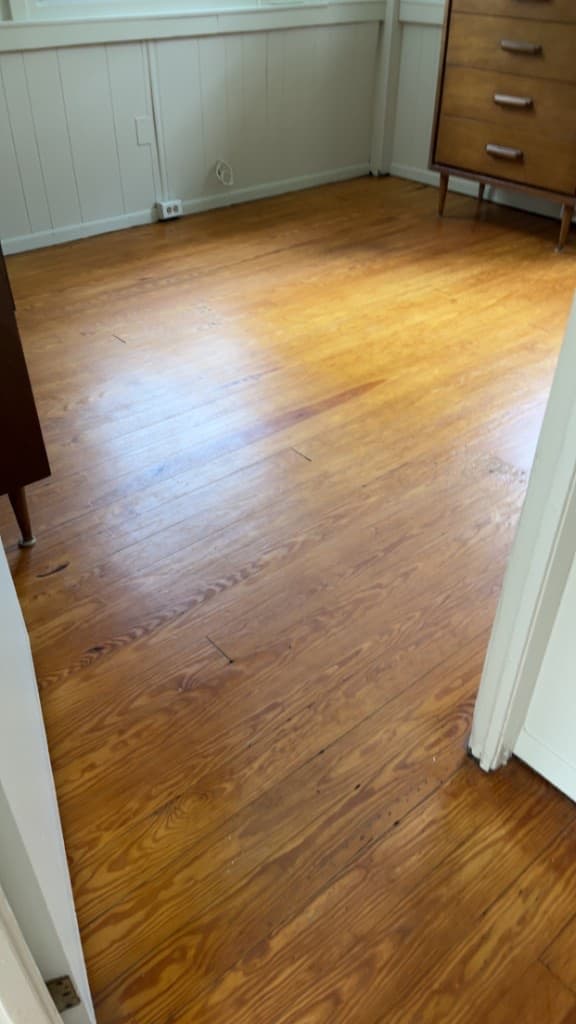
In this guide
Working from home can change a floor's life without changing the room very much. A space once used occasionally becomes the place where a chair rolls back and forth every day. The affected area may be no larger than a desk mat, while the rest of the hardwood still looks relatively consistent.
In a Kingsville home office, it is worth examining that small zone before adding a shine product or booking a general clean. The floor, chair wheels and mat interact. If one part of the setup is unsuitable or carrying grit, cleaning the wood alone may not address the reason the marks keep developing.
Look at the route the chair actually takes
Pull the chair away safely and inspect the area under normal light. Notice where the wheels turn, where feet rest and where the mat ends. A narrow line at the edge of a mat may have a different history from a cloudy patch in its center.
Compare the office area with a lightly used part of the room. Differences in sheen, scratching and texture can help frame the discussion. They do not establish a diagnosis by themselves. Ask the professional to distinguish likely removable material from changes to the finish or wood before deciding what kind of service would be appropriate.
Check wheels and contact points
Look for accumulated grit, damaged wheels or a chair component contacting the floor unexpectedly. Follow the chair and flooring manufacturers' guidance about suitable wheels, protectors and mats. Do not assume that a product marketed for general floor protection fits every finish.
Keep the chair's ordinary movement in mind. A mat that is too small may allow repeated rolling over its edge. A setup that catches or shifts can create its own problem. The goal is to support normal work habits with compatible equipment rather than asking the floor to tolerate a daily pattern it is not protected for.
Inspect the mat without making a risky move
If the mat can be safely lifted, check the floor and underside for grit, residue or deterioration. Avoid pulling a heavy desk or loaded furniture simply to reach every edge. If access is difficult, describe it before the appointment.
A mat can change what is visible beneath it. The covered area may have less wear or a different exposure history. If there is residue, do not start with a strong solvent or abrasive tool. Identify the flooring and the mat material, then ask about an appropriate assessment. A quick attempt to remove one mark can damage the finish if the method is unsuitable.
Bring the finish and product history
Try to identify the floor finish through installation or maintenance records. Solid versus engineered construction is useful information, but it does not replace knowing the surface treatment. Previous polishes and cleaners can affect both appearance and the work that is appropriate next.
Keep labels or a list of products available. If you have used a shine-restoring product around the desk, mention whether it was applied only in that spot or across the room. Uneven product histories can make the office area look different for reasons that ordinary soil removal alone may not address.
Keep cleaning, buffing and repair distinct
An appropriate maintenance service can improve removable soil and certain surface conditions on a suitable floor. It cannot be assumed to remove deep scratches or rebuild a worn-through finish. Ask what the proposed process is intended to accomplish.
If a flooring specialist should assess the damage, it is better to know that before repeating cleaning. The right decision may be a limited maintenance service, a change to the chair setup or a different kind of floor work. A clear explanation lets you choose based on the condition rather than on the hope that more shine will conceal it.
Plan the office downtime
Tell the cleaner what equipment will remain and which area can be accessed. Secure cables, paperwork and electronics through your normal routine. Do not expect a cleaning technician to disconnect a workstation or move a fully loaded desk without an agreed arrangement.
Ask when the floor and its protective items can return to normal use. If you work in the room daily, arrange an alternative for the relevant period rather than rolling the chair back over a surface before it is ready. A practical plan includes the return to work, not only the moment the floor looks freshly cared for.
Change the pattern that caused the concern
After the appropriate service or assessment, review the chair setup and routine care. Keep grit from collecting where the wheels travel, maintain compatible protectors and follow the floor manufacturer's directions. A cleaner floor will not stay that way if the same unsuitable contact continues every day.
Explore hardwood cleaning in Kingsville, or browse the Kingsville service directory for nearby rugs and furniture. The aim is a home office that works comfortably without quietly wearing one small area of floor. A good booking description starts with the chair, mat, finish and the marks you can actually see.
Find the right cleaning service
Compare the service details and check your area before requesting a quote.
Local people. Thoughtful care.
Meet the owner behind Eco-Dry.
Rich Tobin runs Eco-Dry from Forest Hill. Your visit may be handled by Rich or an Eco-Dry technician, with the cleaning method matched to your surfaces.
Meet RichKeep exploring
A little more useful advice.
- Maryland
After the cleaning: a room-by-room care guide for Maryland homes
Carpet, rugs, upholstery, wood and vinyl should not all be returned to use the same way. Keep the results practical with material-specific aftercare and clear follow-up.
Read the guide - Ellicott City
Cleaning older hardwood in an Ellicott City home
An older floor may carry several generations of maintenance products. Learn why its finish history matters before choosing a cleaning or buffing service.
Read the guide - Fallston
Fallston hardwood floors: clean and buff or refinish?
A dull wood floor does not always need sanding, but cleaning has limits. Learn what the finish, wear pattern and previous products can tell you.
Read the guide