
Tile & grout Maryland
Marble and Travertine Cleaning for Maryland Well-Water Homes
Why calcium-rich Maryland well water and acidic household cleaners dull marble and travertine floors, how pH-neutral extraction and breathable sealers protect stone, and when honing is required.
Ready for a professional clean? Book online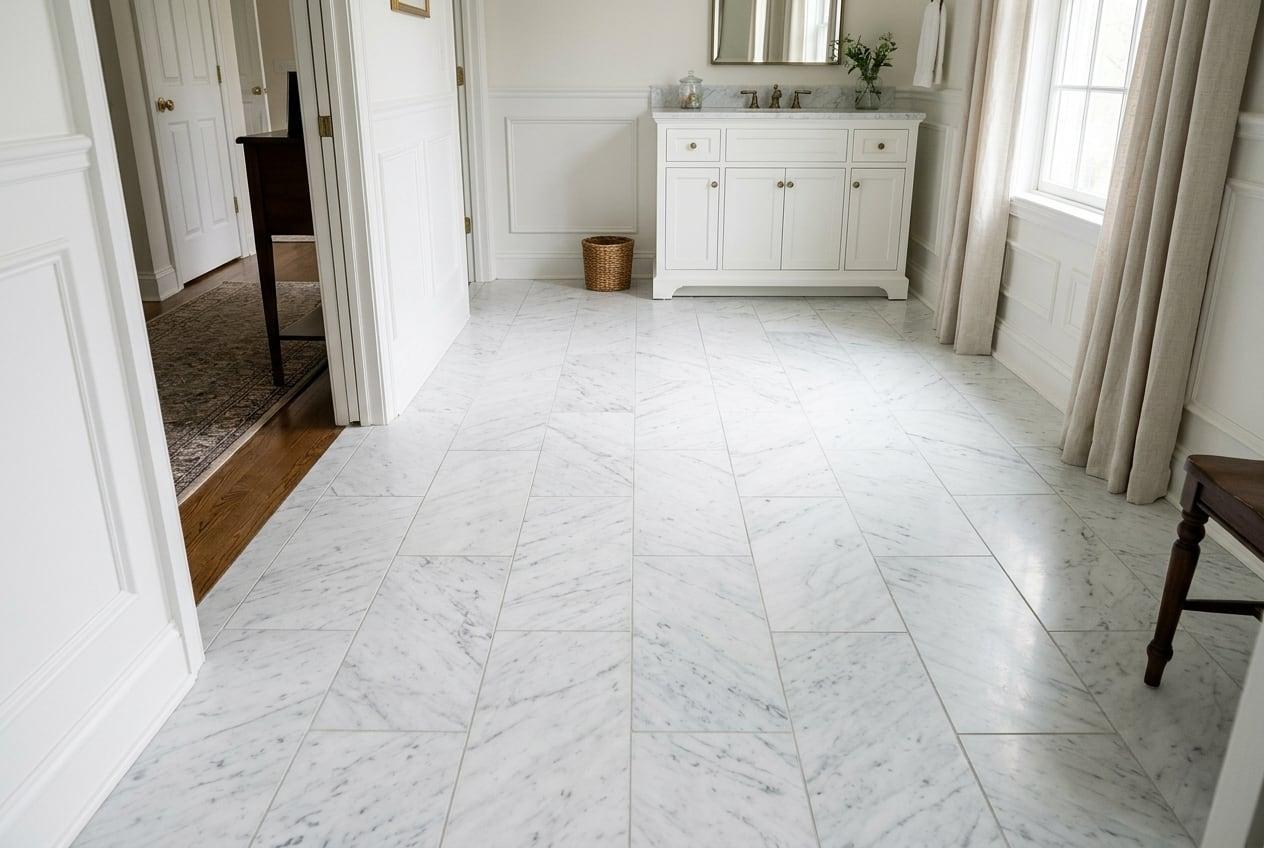
In this guide
Homeowners across Forest Hill, Fallston, Jarrettsville, Phoenix, Monkton and Sparks love natural stone for good reason. Honed Carrara marble baths, tumbled travertine mudrooms, cleft slate foyers and limestone hearths bring warmth and character that synthetic tile cannot copy. Yet homes on private Maryland wells face a unique maintenance trap: mineral-heavy water leaves stubborn cloudy film on stone, and the very descaling sprays sold to remove hard water can permanently damage calcite floors in minutes.
Understanding the chemistry of your stone protects both its finish and your restoration budget.
Calcite stone versus siliceous stone
Before a single drop of cleaner touches a stone floor, the mineral family matters more than the color.
Calcite-based stones include marble, travertine, limestone and onyx. Because they are composed primarily of calcium carbonate, they react immediately with acids. Even mild kitchen vinegar, citrus cleaners, wine splashes, tomato sauce or ordinary bathroom tile sprays dissolve a microscopic layer of calcite on contact. That chemical burn is called an etch mark. It is not a stain sitting on top of the stone; it is physical dullness eaten into the polished or honed surface.
Siliceous stones include slate, quartzite, granite and sandstone. They are far more resistant to mild acids, though they still suffer from waxy acrylic mop coatings, trapped mud grit and darkened grout joints.
Why Maryland well water dulls stone floors
Many estates and rural properties across northern Harford County and northern Baltimore County run on private wells with elevated dissolved calcium, magnesium or trace iron. Even when a water softener is installed, bath steam, wet boots and damp mopping leave behind a microscopic mineral film. Combine that mineral veil with body lotions, bath oils or grocery-store floor shine products, and a bright foyer or primary bath gradually looks flat and chalky under angled sunlight.
When homeowners reach for CLR, vinegar mixes or foaming shower sprays to cut that well-water haze, the acid cuts through the mineral film and keeps right on dissolving the marble or travertine underneath.
What safe pH-neutral extraction actually does
Eco-Dry cleans natural stone differently from standard ceramic tile. Our natural stone cleaning and sealing process begins with dry particulate removal so tracked-in quartz grit never scratches polished or honed faces during agitation. Next, we apply a strictly acid-free, pH-neutral stone cleaner formulated to break down oily residues, bath soap film and embedded traffic soil inside travertine pits and stone grout lines.
Using soft non-abrasive agitation and contained hot water vacuum extraction, we rinse suspended soil and old mop coatings completely out of the floor without splashing baseboards, painted vanities or adjoining oak planks.
The truth about breathable penetrating sealers
Once stone is clean and dry, sealing protects the investment, provided the right product is used. Topical glossy wax coatings trap moisture inside stone, scuff rapidly in traffic paths and yellow over time.
A breathable impregnating sealer works beneath the surface inside microscopic stone pores. It does not change the look of honed marble or natural slate, and it does not make stone invincible to acids. What it does is slow down capillary absorption of water, coffee, red wine and kitchen cooking oils so you have crucial minutes to blot a spill cleanly. If a fresh spill does happen, keep our Emergency Stain First-Aid Guide bookmarked so acidic sprays never touch the floor.
Honest boundaries: cleaning versus diamond honing
Honesty before work begins saves homeowners thousands of dollars. Professional pH-neutral cleaning removes dirt, grease, soap film, well-water surface haze and stacked mop polish. It cannot chemically erase a physical acid etch ring, deep pet-bowl corrosion, lippage or heavy furniture scratches. Those conditions require mechanical diamond honing and polishing by a dedicated stone restoration specialist.
During an on-site inspection in Phoenix, Monkton, Fallston or Bel Air, Rich tests sheen clarity under raking light and tells you plainly whether neutral cleaning and sealing will deliver the crisp result you want or whether honing should come first.
Daily care habits that keep stone clear
Vacuum stone foyers and baths regularly with a soft-brush attachment instead of pushing gritty dust across the floor with a dry broom. Use only a pH-neutral stone cleaner diluted per label directions with clean microfiber pads, and squeegee or towel-dry shower splashes to cut well-water spotting. When your floors are ready for deep reset and resealing, request a tailored stone quote on our contact page or compare materials in our Surface Care Finder.
Find the right cleaning service
Compare the service details and check your area before requesting a quote.

Local people. Thoughtful care.
Meet the owner behind Eco-Dry.
Rich Tobin runs Eco-Dry from Forest Hill. Your visit may be handled by Rich or an Eco-Dry technician, with the cleaning method matched to your surfaces.
Meet RichKeep exploring
A little more useful advice.
- Phoenix
Well water and the white film on tile and shower floors in Phoenix
Hard well water leaves a chalky film on tile, grout and shower floors. How to tell it from soap scum and etching, what a cleaning removes and why the long-term fix starts with the water.
Read the guide - Whiteford
Slate and natural stone floors in Whiteford: what cleaning can do
Cleft slate holds dirt in every ridge, and some stones etch with the wrong cleaner. How to care for slate and stone floors, how sealers work and where cleaning stops.
Read the guide - Abingdon
Why Abingdon kitchen grout stays dark after mopping
A clean-looking tile face can sit beside stubborn dark grout. Understand residue, cooking soil and the difference between cleaning, sealing and repair.
Read the guide