
Tile & grout Abingdon
Why Abingdon kitchen grout stays dark after mopping
A clean-looking tile face can sit beside stubborn dark grout. Understand residue, cooking soil and the difference between cleaning, sealing and repair.
Ready for a professional clean? Book online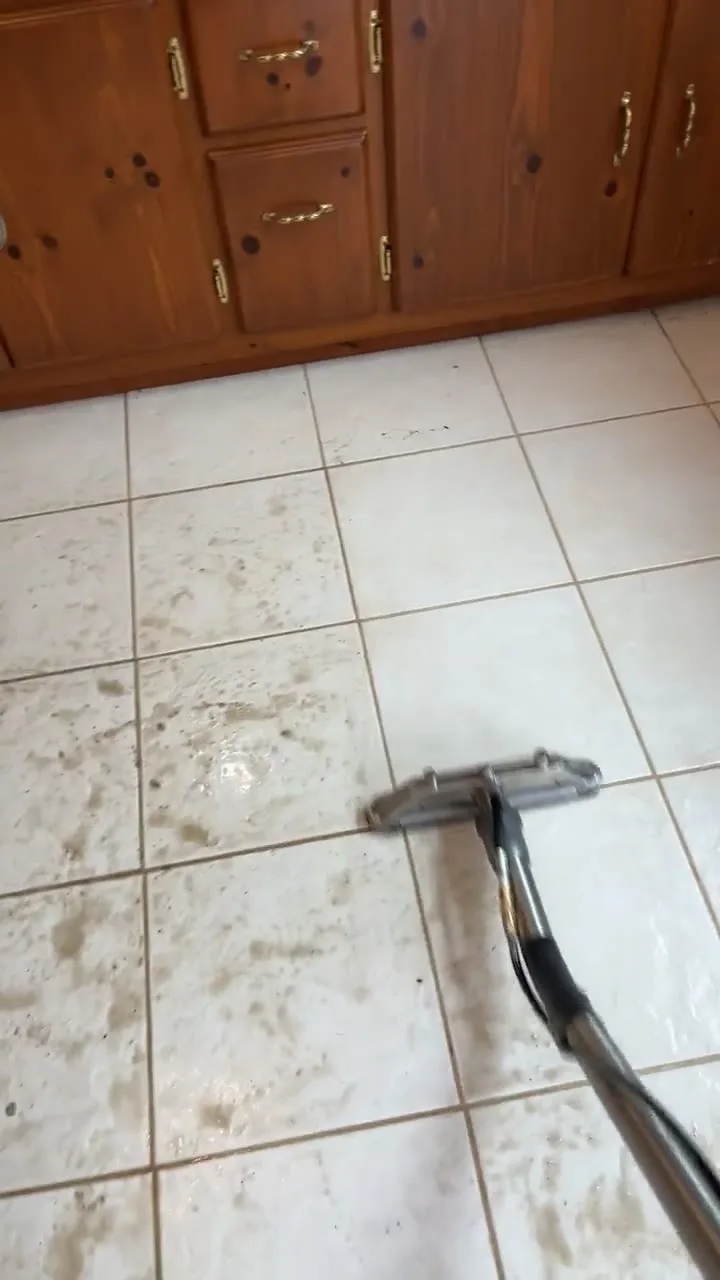
In this guide
The kitchen can look freshly mopped until you focus on the lines between the tiles. The tile faces reflect the light, but the grout beside the stove or along the busiest path still looks darker. After another round of mopping, it may seem only slightly better, or not better at all.
For an Abingdon kitchen, the first useful question is what the routine is removing and what it is moving around. Tile, grout and any existing coating are different parts of the installation. They may need different attention. Reaching for the strongest cleaner before identifying them can create a second problem without solving the first.
Read the pattern around the room
Compare grout near the cooking area, the sink, the entrance and a less-used corner. Soil associated with cooking and repeated foot traffic may be concentrated in specific places. A uniform color difference throughout the room may suggest a different history, including an old treatment or the original appearance of the grout.
Do not assume grout under a cabinet edge is the exact color the entire floor can return to. It may have been protected from use, moisture and past cleaning. It is still a helpful comparison. Show the cleaner a busy area and a protected one so the discussion is based on the room's actual condition.
Understand why mopping has limits
A mop passes easily over tile faces, while the grout joints may sit lower or have a different texture. Dirty water and soil can be redistributed if the routine does not remove them effectively. Product residue can also complicate the appearance of the floor over time.
Before changing the routine, identify the products already in use and follow their directions for the installation. More product is not automatically more effective. A floor can be difficult to rinse or recover properly when the cleaning mixture is stronger than intended. Keep the label available and explain how often the floor is cleaned and whether it feels sticky or slippery afterward.
Identify the surface before choosing the chemistry
Ceramic, porcelain and natural stone do not all have the same care requirements. Decorative inserts or trim can introduce another material into an otherwise familiar-looking floor. Grout type and any coating or sealer also matter.
If you are unsure, do not use acids, abrasive pads or an improvised mixture to see what happens. Product identification and a professional assessment are better starting points. A cleaner should explain why a method is suitable for the floor in front of them. A successful demonstration on someone else's kitchen does not prove compatibility with your tile or grout.
Keep cleaning and repair separate
Missing grout, cracking and loose material are not simply dark spots waiting for stronger cleaning. Point them out before the appointment. The same applies to movement in the tile or a known leak nearby. Those observations can change the order of work.
Cleaning may improve removable soil while revealing damage that was previously less obvious. That is one reason to inspect first. Ask whether the proposed service includes only cleaning or whether another professional should address repairs. Avoid treating a sealer or color treatment as a way to hide a problem that needs to be corrected physically.
Discuss sealing only after understanding the floor
Sealing is not a universal substitute for maintenance, and the right product depends on the installation. Ask what kind of treatment is being proposed, what it is intended to do and what it will not do.
If color sealing is an option, discuss the appearance you want, preparation requirements and the care instructions afterward. A meaningful quote distinguishes the cleaning work from an optional sealing service. It should also explain any limitations caused by old coatings, damaged grout or areas that cannot be prepared appropriately. These are separate choices, even when they happen during a coordinated project.
Prepare the room for useful access
Clear lightweight items, mats and movable chairs where safe. Tell the cleaner about appliances or heavy furniture that will remain in place. The accessible area should be clear before the scope is agreed upon.
Think about how the kitchen will be used during the visit. If it is the route to the back door or the only place pets can reach water, plan an alternative. Ask when the floor can be used and when mats should return. Drying and treatment requirements should reflect the actual service, not an assumption that every tile floor is ready immediately.
Judge the improvement in normal use
Look at the floor after the recommended drying period, under the lighting you use every day. Compare the agreed areas and keep the original limitations in mind. If some discoloration remains, ask whether it represents staining, wear, coating or a repair issue rather than immediately repeating the same treatment.
Learn more about tile and grout cleaning in Abingdon, or use the local service directory to plan other surfaces. A good next step starts with identifying the floor and describing its history. The result should be a cleaner kitchen and a maintenance plan you understand, not another bottle added to the cupboard.
Find the right cleaning service
Compare the service details and check your area before requesting a quote.

Local people. Thoughtful care.
Meet the owner behind Eco-Dry.
Rich Tobin runs Eco-Dry from Forest Hill. Your visit may be handled by Rich or an Eco-Dry technician, with the cleaning method matched to your surfaces.
Meet RichKeep exploring
A little more useful advice.
- Maryland
After the cleaning: a room-by-room care guide for Maryland homes
Carpet, rugs, upholstery, wood and vinyl should not all be returned to use the same way. Keep the results practical with material-specific aftercare and clear follow-up.
Read the guide - Phoenix
Well water and the white film on tile and shower floors in Phoenix
Hard well water leaves a chalky film on tile, grout and shower floors. How to tell it from soap scum and etching, what a cleaning removes and why the long-term fix starts with the water.
Read the guide - Whiteford
Slate and natural stone floors in Whiteford: what cleaning can do
Cleft slate holds dirt in every ridge, and some stones etch with the wrong cleaner. How to care for slate and stone floors, how sealers work and where cleaning stops.
Read the guide