
Hardwood floors Parkville
Hardwood revealed in a Parkville home: what comes next?
Finding wood beneath old carpet is exciting, but its finish and condition need assessment. Separate cleanup, residue removal and repair before planning the room.
Ready for a professional clean? Book online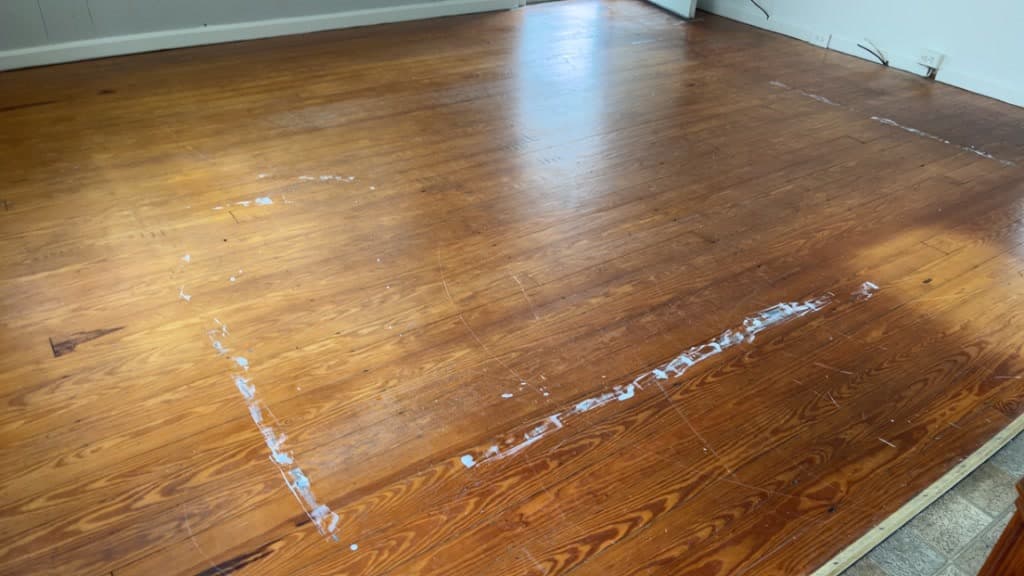
In this guide
There is an appealing moment when an old floor covering comes away and wood appears beneath it. The room suddenly seems full of possibilities. It is also the moment when cleanup can move too quickly, before anyone has established what is on the surface or what condition the floor is actually in.
For a Parkville homeowner whose floor has already been uncovered through appropriate work, the next decision should be assessment. A wood surface may carry old residue, wear, repairs or a finish history that is not obvious. Routine maintenance cleaning is only one possible part of the plan.
Start with the exposed condition
Look at the floor after the removal work has been completed safely. Note visible residue, marks, damaged areas and differences between sections. Keep the people doing the removal involved in explaining anything they found or left behind.
This guide is not an instruction to remove unknown older materials yourself. If a covering, adhesive or underlying condition is uncertain, use the appropriate qualified professional. Once the surface is accessible, the cleaning conversation should begin with an accurate description of what is there rather than an assumption that bare-looking wood needs only a mop.
Find the finish history where possible
The floor may have been refinished or treated before it was covered. Ask for any available records, but keep uncertainty explicit when the history is missing. The construction of the flooring does not, by itself, identify its surface finish.
Avoid improvised water, solvent or scratch tests. A professional should assess what care is appropriate. A maintenance process intended for an intact finish may not suit a worn-through or otherwise uncertain surface. Knowing that before service is more useful than discovering the mismatch after a product has been applied across the room.
Separate residue from the floor beneath it
Material left by a previous covering may require a different assessment from ordinary household soil. Identify it where possible through the removal contractor or relevant records. Do not scrape aggressively or choose a chemical based only on whether it seems to dissolve a small patch.
An unsuitable method can damage the finish or wood while removing the residue. Ask who should handle that stage and how it relates to any later cleaning. A clear sequence protects the floor and makes it easier to judge the condition after the unwanted material has been addressed appropriately.
Look for physical repair needs
Gaps, damaged boards, loose material and marks associated with earlier work are not all cleaning concerns. Point them out before arranging a routine maintenance service. A flooring professional may need to assess the room before a cleaner can offer an appropriate scope.
Do not expect cleaning to make every repaired or previously covered area uniform. Different exposure and wear histories may remain visible. The goal is to understand which changes are removable surface material and which belong to the floor itself. That distinction helps you decide whether maintenance, repair or a larger refinishing project fits your priorities.
Ask what clean and buff means for this floor
Service names can sound broader than the work they describe. Ask what process is being proposed, which areas are suitable and what improvement is expected. Clarify whether the work includes only maintenance or whether another specialist service is needed first.
A useful assessment may conclude that the floor is not a candidate for the maintenance service you initially considered. That can be a valuable answer. It prevents spending on a process that cannot address the main condition. An honest scope should describe limits before work begins, not explain them only after the result is disappointing.
Coordinate the rest of the room work
Painting, repairs and heavy furniture movement can affect the timing of final floor care. Where practical, finish messy work before the last cleaning stage. Tell the provider what remains scheduled and which areas need to stay accessible.
Ask how the floor should be protected and when normal use can resume after the chosen process. Do not cover a surface or return furniture based on a general rule from another flooring type. Follow the instructions for the actual finish and service. A good handover connects the care work to how the room will be used afterward.
Make the next decision with the floor in view
Keep photos and notes about the condition and any work completed. If you are comparing options, ask providers to explain the same areas and concerns so their recommendations can be understood on equal terms. A dramatic promise is less useful than a clear description of suitable work.
Read hardwood cleaning in Parkville for Eco-Dry's maintenance scope, and Parkville's service directory for other surfaces. Revealed wood can be a welcome discovery. The right next step is to understand it before treating it, with a plan based on its present finish and condition.
Find the right cleaning service
Compare the service details and check your area before requesting a quote.
Local people. Thoughtful care.
Meet the owner behind Eco-Dry.
Rich Tobin runs Eco-Dry from Forest Hill. Your visit may be handled by Rich or an Eco-Dry technician, with the cleaning method matched to your surfaces.
Meet RichKeep exploring
A little more useful advice.
- Maryland
After the cleaning: a room-by-room care guide for Maryland homes
Carpet, rugs, upholstery, wood and vinyl should not all be returned to use the same way. Keep the results practical with material-specific aftercare and clear follow-up.
Read the guide - Ellicott City
Cleaning older hardwood in an Ellicott City home
An older floor may carry several generations of maintenance products. Learn why its finish history matters before choosing a cleaning or buffing service.
Read the guide - Fallston
Fallston hardwood floors: clean and buff or refinish?
A dull wood floor does not always need sanding, but cleaning has limits. Learn what the finish, wear pattern and previous products can tell you.
Read the guide