
Carpet care White Marsh
Why a carpet spot keeps returning in White Marsh
A mark that reappears after drying can have a different cause from a traffic lane that slowly darkens. Learn what timing and pattern can tell a cleaner.
Ready for a professional clean? Book online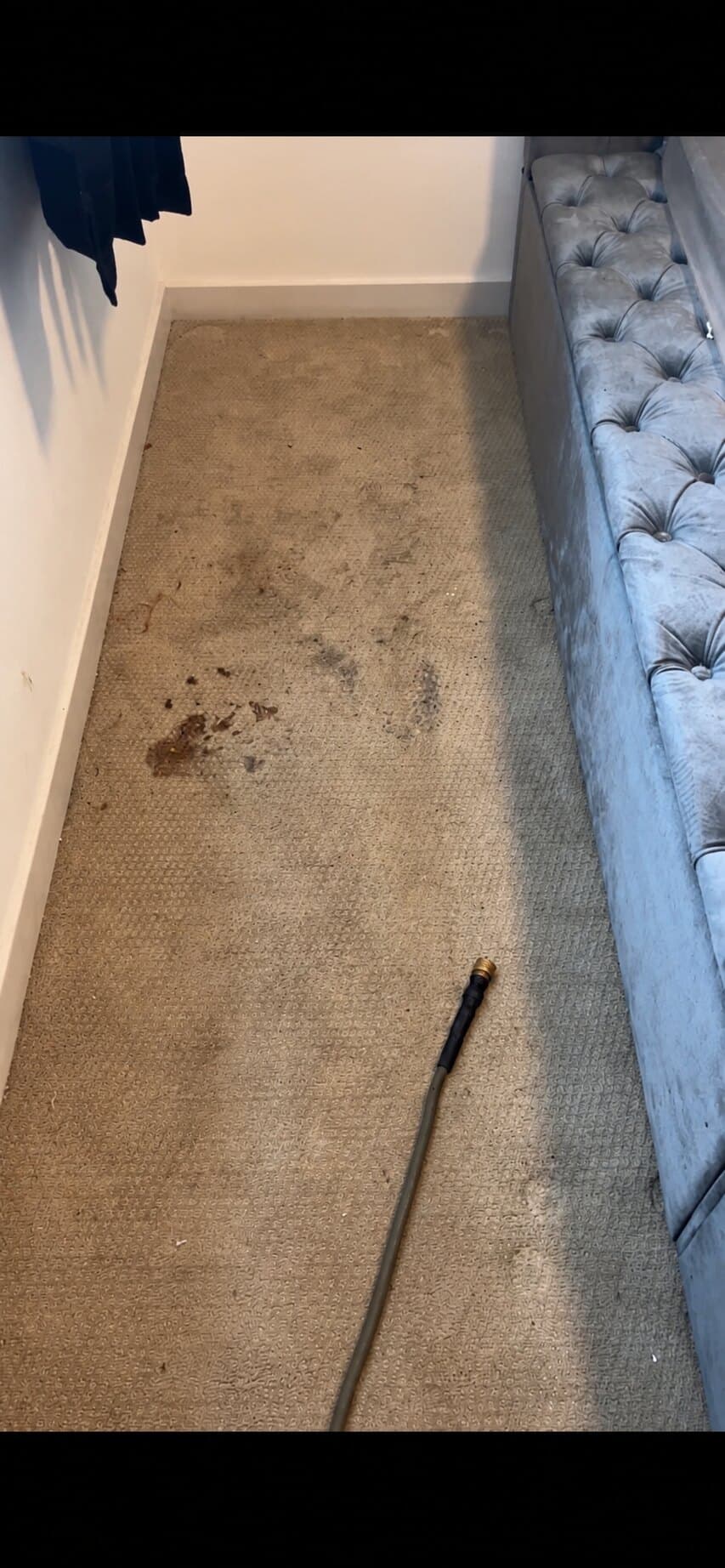
In this guide
The spot disappears, the carpet dries and the mark slowly shows itself again. Or perhaps it looks fine for several weeks before the same area starts attracting attention. Those two stories can sound similar when summarized as “the stain came back,” but they are not identical observations.
For a White Marsh homeowner, timing and pattern are worth recording before another treatment. A useful assessment considers material within the carpet, residue on the fibers, new soil and lasting changes in color or texture. The goal is to choose the next step based on the condition rather than repeat the same attempt with more product.
Note how soon it returns
Does the mark appear as the carpet dries, shortly afterward or only after normal household use has resumed for a while? Write down the sequence as accurately as you can. Include the cleaning method or product that preceded it.
The timeline does not diagnose the cause, but it helps distinguish different possibilities. A spot reappearing during drying raises different questions from a walkway collecting soil over several weeks. Share the observation in plain language. The cleaner does not need you to identify a technical mechanism before the conversation can be useful.
Compare the outline
Look at whether the mark returns in the same shape, spreads beyond the original area or blends into a broader traffic path. Photographs taken under similar lighting can help document that change. Include a normal room view as well as a closer image.
Do not assume every shadow in the same location is the same substance. Pile direction, wear and lighting can affect appearance. A professional should consider those factors alongside the spill history. The most useful description is what you have actually seen, with uncertainty kept clear where the pattern is hard to judge.
Understand why drying can change appearance
Material below the visible surface can sometimes move toward the face as moisture dries, a process often called wicking. That is different from new soil being tracked onto the carpet after it returns to service. The appropriate response depends on the actual condition and construction.
Avoid treating this explanation as a diagnosis for every returning mark. Ask the cleaner what evidence supports the proposed approach and which limits remain. A heavily affected area may involve more than the surface fibers. Repeating routine cleaning without addressing the relevant condition may not provide the result you are hoping for.
Consider previous product use
An area that received repeated spot sprays or a strong detergent mixture can have a different history from the surrounding room. Residue may be part of the assessment, particularly if the carpet feels tacky or seems to soil unusually quickly.
Keep product labels and explain how they were used. Do not add another deodorizer or cleaner immediately before the appointment. Each application makes the history more complicated. The professional can give better advice when the current condition is visible and the previous attempts are described accurately.
Separate a stain from a lasting change
Color loss, fading and worn fibers are not removable soil. A mark may remain visible after cleaning because the carpet itself has changed. That can be frustrating, but it is important to recognize before paying to repeat a process that cannot put the material back.
Ask which parts of the concern are likely to improve and whether another service should be considered. A clearer overall carpet may still show one persistent difference. The useful standard is the agreed scope and expected improvement, not an unconditional promise that every visible mark will disappear.
Stop the cycle of increasingly aggressive attempts
Follow the carpet manufacturer's care guidance and avoid improvised heat, harsh mixtures or aggressive rubbing. If the cause is unclear, repeated experimentation can enlarge the concern or create an additional texture problem.
If a spot returns after a professional visit, contact the provider with the timing, location and photos before treating it again. A follow-up discussion is more useful when the area has not been altered. Keep the tone factual: what looked different, when it happened and how the room was used afterward. That gives the cleaner a practical basis for advising you.
Book with a short history attached
Include the room, approximate affected area, known spill or pet history, prior products and the pattern of recurrence. Tell the company if there is a current moisture problem so it is not mistaken for an ordinary spot-cleaning request.
See carpet cleaning in White Marsh, and White Marsh's local services if other surfaces are involved. A recurring mark is a reason to ask a better question, not automatically to use a stronger cleaner. The right next step begins with the history and an honest assessment of what can be improved.
Find the right cleaning service
Compare the service details and check your area before requesting a quote.

Local people. Thoughtful care.
Meet the owner behind Eco-Dry.
Rich Tobin runs Eco-Dry from Forest Hill. Your visit may be handled by Rich or an Eco-Dry technician, with the cleaning method matched to your surfaces.
Meet RichKeep exploring
A little more useful advice.
- Perry Hall & White Marsh
Carpet Cleaning in Perry Hall and White Marsh, MD
How to plan carpet cleaning for Perry Hall and White Marsh townhomes, including stairs, pet areas, basement carpet, traffic lanes, and move-out timing.
Read the guide - baltimore county
A clearer cleaning quote for north Baltimore County homes
Use a simple household inventory to describe carpet, furniture, rugs and hard floors. Good details make a combined cleaning quote easier to understand.
Read the guide - Maryland
After the cleaning: a room-by-room care guide for Maryland homes
Carpet, rugs, upholstery, wood and vinyl should not all be returned to use the same way. Keep the results practical with material-specific aftercare and clear follow-up.
Read the guide