
Rug care Jarrettsville
Caring for a wool runner in a Jarrettsville home
A narrow runner receives concentrated use. Learn how to inspect its edges, manage dry soil and decide whether on site cleaning suits the rug you own.
Ready for a professional clean? Book online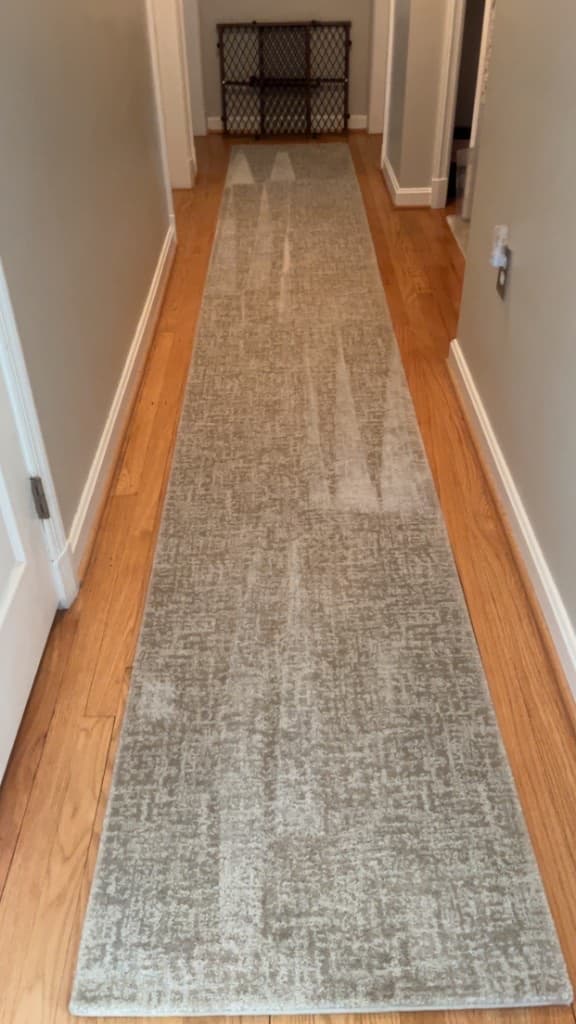
In this guide
A runner is a small rug with a big assignment. It may protect a hallway, connect two rooms or catch the route from an entrance to the kitchen. Because the path is narrow, feet tend to land in the same strip over and over. That can make the middle look tired while the edges still seem nearly untouched.
If a Jarrettsville home has a wool runner, caring for it means thinking about more than the face fiber. The backing, dyes, fringe and floor beneath it all matter. A practical routine starts with knowing what you have and recognizing the difference between accumulated soil and the changes caused by repeated use.
Confirm what the runner is made from
Look for a label or purchase information if it can be reached without moving heavy furniture unsafely. A soft feel or traditional pattern does not identify wool with certainty. Blends and different constructions can look similar while requiring different handling.
If the rug has been repaired, re-backed or professionally cleaned before, keep any information available. Tell the cleaner what is known and what is not. The assessment should be based on the actual piece rather than an assumption attached to its style or price. That is particularly important when color stability or backing condition is uncertain.
Compare the center with the edges
Look along the runner from both directions under similar lighting. Pile direction can change the appearance, while repeated traffic can flatten or wear the center. A difference in shade is not automatically a single removable stain.
Check the edges for curling, loose material or a fringe that has become uneven. Those are separate concerns from ordinary soil. Ask what cleaning may improve and whether any repair should be considered. A useful result begins with realistic expectations about the rug's physical condition, not a promise that every section will return to identical texture and color.
Remove dry soil with an appropriate routine
Follow the rug manufacturer's directions for vacuuming and tools. Take particular care around edges and fringe, which can be vulnerable to pulling or tangling. Avoid assuming that the most powerful or aggressive setting will provide the best care.
Pay attention to the floor and pad beneath the runner when it can be safely lifted. Grit can collect in places a surface pass does not reach. If the rug has shifted, do not simply straighten it over a dirty or deteriorating pad. Keeping the full setup in good condition is part of caring for the runner itself.
Respond to spills without escalating them
Use the rug's care instructions and act cautiously. Blotting and careful removal of loose material are different from scrubbing repeatedly at a mark. An unfamiliar product or a strong homemade mixture can make dye and fiber questions more complicated.
Keep track of what spilled and what was applied afterward. If the spot remains or the rug's suitability is uncertain, stop experimenting and arrange advice. Do not saturate a runner in place over a floor that should be protected from moisture. A small visible mark can involve more than the area you see on the surface.
Understand the limits of on site cleaning
Routine rug-body care may be suitable for some pieces after assessment. It is not the same as every specialist process available for rugs. Fringe cleaning, structural repair and certain severe contamination problems can require different facilities or expertise.
Ask how the cleaner will determine suitability and protect the surroundings. If a dedicated rug facility is recommended, ask what condition led to that advice. A recommendation that changes your original plan can still be the most useful one. The aim is an appropriate process for the runner, not simply the fastest way to complete a household task.
Make a useful booking description
Include the approximate dimensions, material information, location in the home and your main concern. Mention heavy furniture, repeated pet incidents, fringe issues or previous repairs. Those details help distinguish routine maintenance from a request that may need specialist referral.
Learn about area rug cleaning in Jarrettsville, or browse the Jarrettsville service directory to plan care for nearby surfaces. A runner does not need a complicated routine to be well cared for. It needs an appropriate one, based on its construction, the way it is used and the condition you can actually observe.
Find the right cleaning service
Compare the service details and check your area before requesting a quote.

Local people. Thoughtful care.
Meet the owner behind Eco-Dry.
Rich Tobin runs Eco-Dry from Forest Hill. Your visit may be handled by Rich or an Eco-Dry technician, with the cleaning method matched to your surfaces.
Meet RichKeep exploring
A little more useful advice.
- Maryland
After the cleaning: a room-by-room care guide for Maryland homes
Carpet, rugs, upholstery, wood and vinyl should not all be returned to use the same way. Keep the results practical with material-specific aftercare and clear follow-up.
Read the guide - Perryman
Sunroom and porch rugs and cushions in Perryman
Sun fades them and damp air mildews them. How to care for sunroom and porch rugs and cushions, and what a cleaning can and can't bring back.
Read the guide - Sparks
Barn boots and carpet: keeping the back door clean in Sparks horse country
Arena dust, hay chaff, trail grit and clay mud all end up inside the back door. How Sparks horse owners can stop more of it at the entry, handle mud on carpet and rugs, and know what cleaning can lift.
Read the guide