
Tile & grout White Marsh
Why White Marsh bathroom tile can look dull after cleaning
Soap film, cleaning residue and surface changes can look alike. Identify the tile and the pattern before applying a stronger bathroom-cleaning product.
Ready for a professional clean? Book online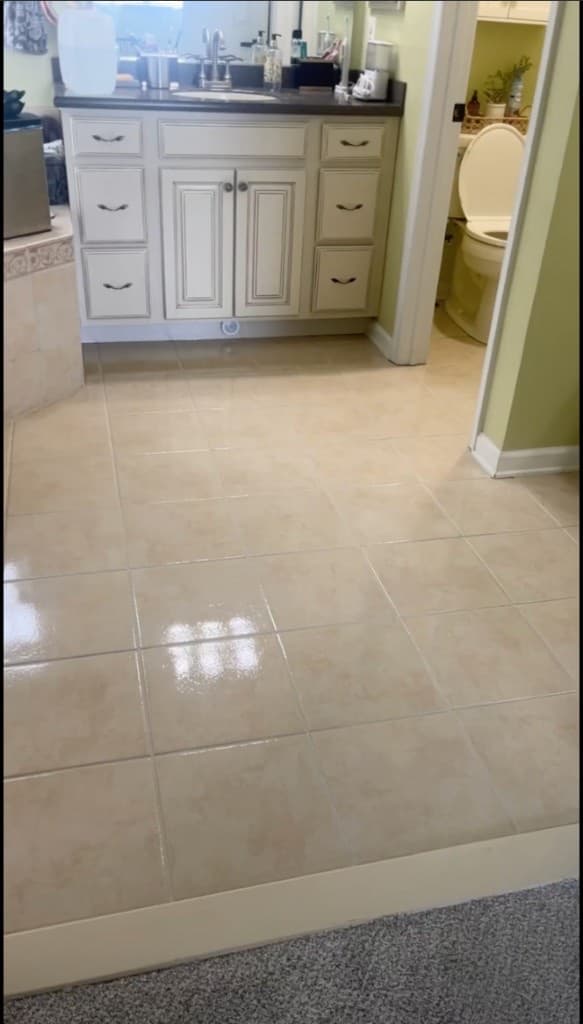
In this guide
A bathroom floor can be freshly cleaned and still look cloudy. The tile near the bath may have one appearance, the path beside the sink another, and the grout a different shade altogether. The result can make it feel as though the room needs a much stronger product.
For a White Marsh home, stronger is not the first question to answer. The useful questions are what the surface is, where the condition appears and how it has been maintained. Soap film, ordinary soil, product residue and a physical surface change are not the same problem, even when they look similar from the doorway.
Identify the material before escalating treatment
Ceramic and porcelain are not interchangeable with every natural stone used in bathrooms. Decorative borders, thresholds and other details may introduce a different material into the room. The grout and any existing treatment need consideration too.
Look for product information from an installation or renovation. If the material is unknown, say so. Do not use an acidic product or abrasive tool as an identification test. A cleaner should assess compatibility before choosing a process. A method that improves one tile can be inappropriate for a nearby insert that looks like part of the same design.
Map the dullness
Look at the floor in ordinary light and note where the film or appearance change is strongest. Is it beside a frequently used fixture, along the main walking path or spread across the whole room? Does it change after drying?
Those observations help the professional assess the condition without requiring you to name its cause. A mark that looks like residue may involve something else. Take a wider photograph and a close view if useful, but avoid assuming that a photo establishes the material or treatment. The room's history is part of the evidence.
Review the routine and products
List what is used for the floor and nearby surfaces. Include sprays that may reach the tile while another part of the bathroom is cleaned. Explain whether products are diluted, whether the same pad is used repeatedly and whether the floor feels sticky or slippery afterward.
More product can complicate removal rather than improve it. Follow the manufacturer's directions for the installation and cleaning product. Do not mix chemicals or layer a new treatment over an uncertain residue. A clear account of the existing routine helps the cleaner recommend an appropriate next step.
Inspect grout separately
Dark grout and dull tile faces can require different attention. Look for missing material, cracking or areas that appear physically damaged. If there is a known leak or another water issue, mention it before a routine cleaning appointment.
Cleaning should not be presented as a repair for the installation. A provider may recommend another professional or a different sequence of work. That can prevent spending on a surface treatment while the condition causing the problem remains unresolved. Ask which issue each proposed service is intended to address.
Understand what can remain after cleaning
An appropriate process can improve removable soil and certain residues. It cannot be assumed to restore a physically changed surface or erase every stain. Protected and heavily used areas may continue to look different because their histories differ.
Ask the cleaner to explain likely improvement and limits before work begins. Evaluate the result after the recommended drying period in normal lighting. Looking only while tile is wet can create a misleading impression of sheen. A clear standard helps distinguish a successful clean from a separate condition that may need another kind of care.
Treat optional sealing as its own decision
If a grout treatment or other sealing service is discussed, ask why it is appropriate for the actual installation. Clarify preparation, appearance, reopening time and future maintenance. Do not assume sealing means the floor will no longer collect soil or need suitable cleaning.
A treatment should not be used to hide missing or damaged grout. Understand which areas are included and whether another service must happen first. Keeping those decisions separate makes the quote and the result easier to assess, especially in a small bathroom where several materials meet close together.
Plan a useful appointment
Clear manageable items from the floor, including small mats, bins and loose storage. Describe fixed furniture and surfaces you expect to remain untouched. Ask how the bathroom can be used during and after the visit, particularly if it is the household's only convenient one.
Read tile and grout cleaning in White Marsh, and White Marsh's service directory for other cleaning options. The best plan begins with the material, pattern and history. It should leave you with a cleaner surface and a routine you understand, rather than a stronger bottle chosen because the last one disappointed you.
Find the right cleaning service
Compare the service details and check your area before requesting a quote.

Local people. Thoughtful care.
Meet the owner behind Eco-Dry.
Rich Tobin runs Eco-Dry from Forest Hill. Your visit may be handled by Rich or an Eco-Dry technician, with the cleaning method matched to your surfaces.
Meet RichKeep exploring
A little more useful advice.
- Maryland
After the cleaning: a room-by-room care guide for Maryland homes
Carpet, rugs, upholstery, wood and vinyl should not all be returned to use the same way. Keep the results practical with material-specific aftercare and clear follow-up.
Read the guide - Phoenix
Well water and the white film on tile and shower floors in Phoenix
Hard well water leaves a chalky film on tile, grout and shower floors. How to tell it from soap scum and etching, what a cleaning removes and why the long-term fix starts with the water.
Read the guide - Whiteford
Slate and natural stone floors in Whiteford: what cleaning can do
Cleft slate holds dirt in every ridge, and some stones etch with the wrong cleaner. How to care for slate and stone floors, how sealers work and where cleaning stops.
Read the guide